
Qatar’s High-Stakes Gamble: Trump’s Team, Iran, and the Fight to Prevent a Wider Middle East War
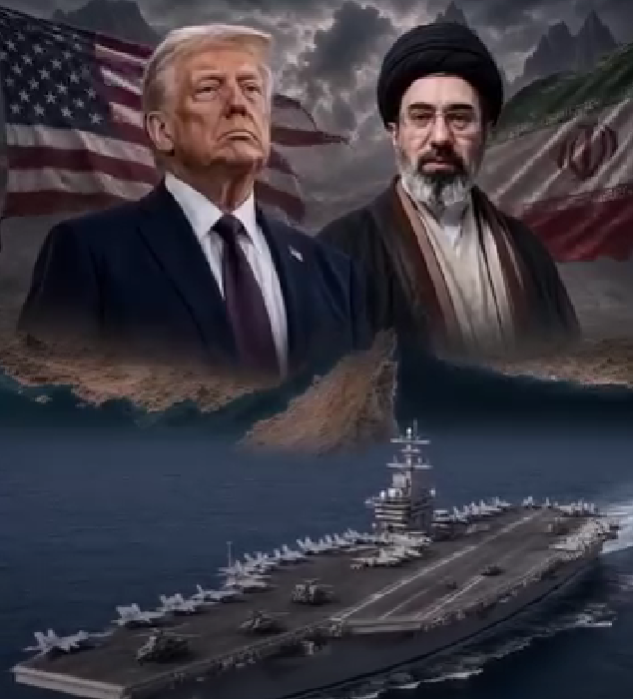
The room is locked. Phones are banned. Every sentence is measured, every pause carries meaning, and every decision could reshape the future of the Middle East. In Qatar, American and Iranian representatives face one of the most difficult diplomatic challenges in modern international politics: finding a way out of a decades-long confrontation without triggering a conflict that neither side can fully control. Outside the negotiating room, the atmosphere is no less tense. American military forces remain a powerful factor in the regional balance, maritime security hangs in the balance, and the possibility of escalation casts a shadow over every discussion. The stakes are enormous. A successful agreement could open the door to a new era of diplomacy, while a collapse in negotiations could push Washington and Tehran closer to a direct military confrontation.
For Donald Trump, the negotiations represent more than an attempt to resolve a foreign policy crisis. They offer the possibility of a defining achievement that could shape his political legacy and demonstrate that his unconventional approach to diplomacy can produce results where traditional methods have repeatedly failed. Trump has long favored a combination of economic pressure, public confrontation, and personal dealmaking. His strategy toward Iran reflects that philosophy: increase the costs of refusing an agreement, maintain military leverage, and leave the door open for negotiations that could deliver a politically significant victory.
Yet this approach carries serious risks. Pressure can bring an opponent to the negotiating table, but it can also convince that opponent that compromise is dangerous. If Iranian leaders believe that concessions will simply invite additional demands, they may conclude that resistance offers a better chance of preserving their strategic position. The central challenge for Trump’s administration is therefore not merely to make Iran negotiate. It is to persuade Tehran that an agreement offers a more secure future than continued confrontation.
Vice President JD Vance faces a different but equally important test. For advocates of a hardline approach, the negotiations provide an opportunity to argue that economic pressure and credible military deterrence can force adversaries to reconsider their calculations. If Iran accepts meaningful restrictions on its nuclear program in exchange for sanctions relief, supporters of this strategy will claim that firmness has delivered what years of diplomatic engagement could not. But if the negotiations fail, the administration could face an uncomfortable question: whether its pressure campaign created the conditions for a breakthrough or simply narrowed the space for compromise.
Secretary of State Marco Rubio must confront the practical details that will determine whether any political agreement can survive. Grand declarations about peace and security are relatively easy to produce. Writing enforceable commitments is much harder. Any potential arrangement would need to address Iran’s uranium enrichment activities, the monitoring and verification of nuclear facilities, the future of international sanctions, and the consequences of noncompliance. Each provision would become a potential battleground, with both governments seeking to protect their interests while avoiding language that could be interpreted domestically as surrender.
For Washington, the objective would be to ensure that Iran’s nuclear activities remain subject to meaningful and verifiable restrictions. American officials would also want reliable mechanisms for detecting violations and responding if Tehran failed to honor its commitments. Without strong verification, an agreement could become little more than a temporary political arrangement that postpones the underlying crisis.
For Iran, however, the same provisions could appear very different. Iranian leaders have repeatedly defended their country’s nuclear program as a matter of national sovereignty and technological development, while insisting that international restrictions must not permanently deny Iran its rights under the nuclear Non-Proliferation Treaty. Tehran would also seek substantial economic benefits from any agreement, particularly relief from sanctions that have constrained trade, investment, and access to international markets.
This creates the central dilemma of the negotiations: Washington wants confidence that Iran cannot rapidly advance toward a nuclear weapon, while Tehran wants confidence that accepting restrictions will produce lasting economic benefits rather than another cycle of pressure.
Neither side can easily abandon its demands without facing criticism at home. American officials would risk accusations of weakness if they offered substantial relief without obtaining meaningful safeguards. Iranian leaders could face accusations of capitulation if they accepted restrictions without securing tangible improvements in their country’s economic position. The diplomatic challenge is to construct an agreement that allows both governments to claim that they protected their national interests.
Qatar’s role is therefore especially significant. The Gulf state has established itself as a diplomatic intermediary capable of maintaining channels of communication between parties that struggle to engage directly. Its geographic position, international relationships, and experience hosting sensitive negotiations make it a valuable venue for discussions involving Washington and Tehran. Qatar cannot guarantee an agreement, but it can help keep communication alive when public statements and political pressures make direct engagement more difficult.
The regional consequences extend far beyond the negotiating room. Iran’s relationship with neighboring countries, the security of shipping routes through the Persian Gulf and the Strait of Hormuz, and the calculations of other regional powers could all be affected by the outcome. A durable agreement might reduce the immediate risk of confrontation and create opportunities for broader diplomatic engagement. A breakdown, by contrast, could intensify military preparations, increase uncertainty in energy markets, and encourage regional actors to prepare for a more dangerous security environment.
The maritime dimension is particularly important. The Persian Gulf is central to global energy transportation, and disruptions to shipping can have consequences far beyond the Middle East. Any agreement addressing maritime security would need to consider freedom of navigation, the risk of accidental encounters between military forces, and the possibility that a local incident could rapidly become an international crisis.
The danger is not limited to a deliberate decision to start a war. Armed confrontations can emerge from miscalculation, incomplete information, or actions intended as warnings that the opposing side interprets as preparations for an attack. A military exercise, an intercepted vessel, a missile deployment, or a strike against a regional partner could create pressure for retaliation. Once that cycle begins, political leaders may find themselves responding to events rather than controlling them.
That is why communication channels and clearly defined commitments matter so much. Diplomacy is not simply about resolving disagreements; it is also about creating mechanisms that prevent disagreements from becoming uncontrollable crises. Even an imperfect agreement could provide valuable time, reduce uncertainty, and establish procedures for managing disputes before they escalate.
Nevertheless, optimism should be treated cautiously. Negotiations do not automatically produce peace, and a signed document does not guarantee compliance. The durability of any agreement would depend on its precise terms, the credibility of verification mechanisms, the willingness of both governments to implement their commitments, and the ability of political leaders to withstand domestic opposition. If either side believes the other is using negotiations merely to buy time, trust could disappear before the agreement has a chance to work.
The most difficult decisions may come after the public announcement. Sanctions relief would need to be delivered in ways that Iran considers meaningful. Nuclear restrictions would need to be implemented and monitored. Disputes would require procedures that prevent every disagreement from becoming a reason to abandon the entire arrangement. Without those safeguards, the agreement could become another temporary pause in a confrontation that has already lasted for decades.
Ultimately, the negotiations in Qatar represent a contest between two competing visions of security. One relies on pressure, deterrence, and restrictions designed to prevent Iran from expanding its strategic capabilities. The other emphasizes sovereignty, economic survival, and resistance to what Tehran views as external coercion. Both governments have reasons to avoid a devastating war, but both also fear that compromise could leave them more vulnerable in the future.
Trump may see the negotiations as an opportunity to achieve a historic diplomatic victory. Vance may view them as a test of whether hardline pressure can force strategic concessions. Rubio must translate those ambitions into provisions that can withstand scrutiny and implementation. Iran’s representatives, meanwhile, must decide whether the potential benefits of an agreement outweigh the political and strategic costs of accepting restrictions.
The outcome will depend on whether both sides can move beyond the immediate desire to appear victorious and recognize the consequences of failure. No negotiator wants to return home looking weak, but the pursuit of a perfect deal can become the enemy of a workable one.
If the talks succeed, Qatar could become the setting for a significant reduction in one of the Middle East’s most dangerous confrontations. If they fail, the region could face renewed uncertainty, intensified military pressure, and a shrinking space for diplomacy.
The ultimate question is not simply whether Washington and Tehran can reach an agreement. It is whether they can construct one that both sides consider preferable to the risks of continued confrontation. In a region where a single miscalculation can have consequences far beyond its borders, that distinction could determine whether Qatar becomes remembered as the place where a crisis began to ease—or where one of the last opportunities to prevent a wider conflict disappeared.