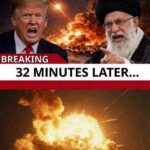

Three Iranian nuclear sites had been hit. A U.S. president was declaring a “historic” victory. Allies were celebrating, rivals were condemning the attack, and neutral governments were urgently pleading for restraint as the Middle East appeared to move closer to a much wider conflict.
In Tehran, officials warned that “all options” remained on the table. In New York, the United Nations was sounding the alarm over the possibility of catastrophic escalation. And across the region, governments and ordinary people were left wondering what would come next.
In the hours after Trump’s announcement, the map of alliances and anxieties lit up almost simultaneously. Iran denounced the strikes as a criminal assault on what it described as peaceful nuclear installations and said it reserved the right to respond under the principle of self-defense. The language was carefully chosen, but its meaning was unmistakable: Tehran wanted the world to understand that it did not consider the matter finished.
Israel, meanwhile, presented the attack as a decisive turning point. Netanyahu praised Trump’s willingness to use force, portraying the operation as evidence that military pressure could eventually create the conditions for peace. For supporters of the strikes, the message was one of strength and deterrence.
But far beyond the immediate battlefield, the dominant reaction was fear.
From Beijing to Brussels, governments warned that striking nuclear-related facilities could push an already unstable region into territory no one could easily control. Concerns centered not only on possible retaliation, but on the broader consequences of another major war in the Middle East: attacks on military bases, disruption to energy supplies, threats against shipping routes, and the possibility of a conflict spreading far beyond Iran and Israel.
The United Nations secretary-general warned that the situation represented a dangerous moment for international peace and security. Other world leaders called for restraint, diplomacy, and an immediate effort to prevent the cycle of attack and retaliation from becoming unstoppable.
Across Europe, the Middle East, Asia, and Latin America, governments repeated variations of the same message: the military confrontation could not be allowed to become permanent. Some urged an immediate return to negotiations. Others called for international inspections and diplomatic channels to remain open, even as the political space for compromise appeared to shrink.
The Vatican also warned about the consequences of escalation, with the pope describing the danger as a path toward an “irreparable abyss.” The warning reflected a fear shared far beyond religious institutions: once major powers begin exchanging direct strikes, the assumptions that previously kept a conflict contained can disappear remarkably quickly.
And that is what makes the moment so frightening.
The immediate question is not simply whether Iran will respond.
It is what form that response could take—and whether another attack would follow.
Every missile creates another calculation.
Every retaliation creates pressure for another response.
The region is now caught between leaders who believe military force can change the balance of power and those who fear that each new strike only makes a larger war more inevitable.
For civilians, however, the strategic arguments are much simpler.
They want to know whether their cities will remain safe.
Whether their families will wake up tomorrow.
Whether another night will bring explosions instead of sleep.
Whether the conflict will remain limited or spread across borders that already feel dangerously thin.
The world is watching because the consequences will not necessarily remain confined to the countries directly involved.
A broader confrontation could affect global energy markets, international trade, migration, military alliances, and relations between the world’s major powers.
And beneath all of those concerns is the most terrifying possibility of all: nuclear escalation.
Even if the weapons involved are not themselves nuclear, attacks on nuclear facilities carry unique risks. They raise questions about radioactive contamination, international inspections, the future of Iran’s nuclear program, and whether the strikes could ultimately push Tehran toward decisions that make the nuclear issue even more dangerous.
For years, diplomacy has attempted to keep that question from becoming a trigger for war.
Now, military action has placed it at the center of the crisis again.
Between those demanding negotiations and those preparing for the next strike, the world is left waiting.
Waiting to see what Washington does next.
And waiting to see whether diplomats can find a narrow path back from the edge.
The Middle East has experienced wars, revolutions, assassinations, and sudden escalations before.
But every new confrontation carries the possibility of something larger.
Tonight, the world remains suspended between war and peace—a peace that already feels more fragile than it did yesterday.
Your email address will not be published.Required fields are marked*
Save my name, email, and website in this browser for the next time I comment.