
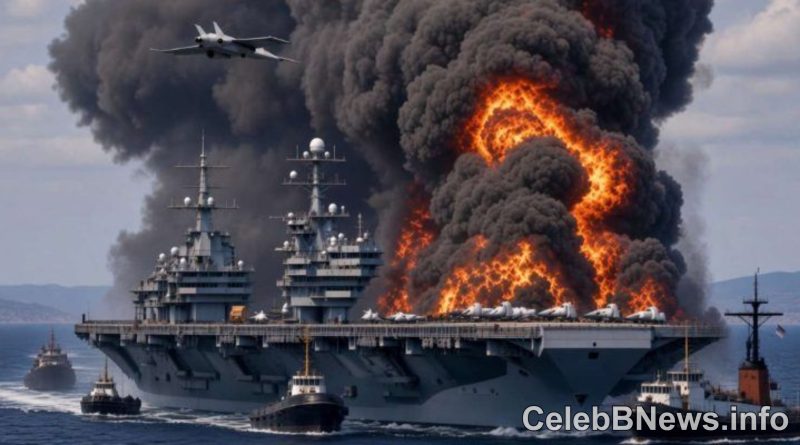
BREAKING: Shocking Reports Claim a Russian Su-57 Stealth Fighter Pilot Allegedly Carried Out a Devastating Strike on a…@

BREAKING: Shocking Reports Claim a Russian Su-57 Stealth Fighter Pilot Allegedly Carried Out a Devastating Strike on a Strategic Target
As the world awaits official confirmation from government authorities, reports alleging that a Russian Su-57 stealth fighter pilot carried out a devastating strike on a strategic target have sparked intense discussion across social media and online news platforms. However, critical details surrounding the alleged incident remain unclear, and independent verification is necessary before any definitive conclusions can be drawn. The identity of the alleged target, the location of the incident, the extent of any damage, and the circumstances surrounding the reported operation have yet to be established.
The reports have attracted attention because the Su-57 is among Russia’s most technologically advanced combat aircraft. Designed as a fifth-generation multirole fighter, it incorporates stealth-oriented design features, advanced onboard sensors, and systems intended to support operations against sophisticated aerial and ground threats. Consequently, any credible report of the aircraft participating in a major strike would likely attract considerable attention from military analysts, intelligence agencies, and defense officials around the world.
Nevertheless, the significance of the aircraft should not be confused with proof that the reported incident occurred. In the modern information environment, dramatic military claims can spread internationally within minutes, frequently before journalists, independent investigators, or government representatives have had sufficient time to establish the facts.
A Growing Wave of Speculation
The vacuum of verified information has created an environment in which speculation can spread rapidly. Social media posts, unofficial military accounts, and online commentators may present competing versions of events, with some claiming to possess inside information while others rely on incomplete footage or secondhand reports. Without reliable corroboration, these claims remain difficult to evaluate.
This digital frenzy has the potential to exacerbate existing geopolitical tensions, particularly when the allegations involve a major military power and an unidentified strategic target. In an atmosphere already shaped by international rivalries, even an inaccurate report can influence public perceptions, trigger political debate, and complicate diplomatic communication.
Geopolitical observers therefore emphasize the importance of separating confirmed information from allegations. Relevant evidence could include independently verified video footage, satellite imagery, credible eyewitness accounts, official statements, and assessments from reputable defense analysts. Each source must be examined carefully, with particular attention paid to the date, location, authenticity, and context of the material being circulated.
Why the Su-57 Matters
The Russian Su-57 has attracted international interest because of its intended role in modern air combat. Its design combines reduced radar observability with advanced avionics, weapons integration, and multirole capabilities. These characteristics are intended to allow the aircraft to perform missions in environments where opposing forces possess sophisticated air defenses.
However, stealth does not mean invisibility, and no combat aircraft is entirely immune to detection or attack. Operational effectiveness depends on multiple factors, including pilot training, mission planning, electronic warfare support, intelligence, maintenance, weapons availability, and the capabilities of opposing forces.
If credible evidence eventually establishes that a Su-57 participated in a significant strike, analysts would need to examine the operation’s specific circumstances before assessing its military implications. The aircraft’s involvement alone would not necessarily demonstrate a decisive technological advantage, a fundamental change in aerial warfare, or the collapse of an opposing defense system.
What This Could Mean for Modern Warfare
Should the central allegations be verified, the incident could provide valuable information about the operational employment of advanced combat aircraft. Depending on the target and the results, defense analysts might investigate the aircraft’s mission profile, the effectiveness of its weapons, the role of supporting systems, and the response of any opposing defenses.
Such evidence could contribute to broader discussions about air superiority, precision strikes, electronic warfare, and the changing relationship between stealth technology and integrated air-defense networks. Governments might also reassess particular operational assumptions if the incident revealed a previously undocumented capability or vulnerability.
Nevertheless, claims that a single strike would automatically force a complete overhaul of global military strategy or redistribute the international balance of power would be premature. Major changes in military doctrine generally emerge from accumulated evidence, repeated operational experience, technological developments, and assessments of strategic costs and benefits.
The Risk of Misinformation and Escalation
The potential consequences of inaccurate reporting extend beyond public confusion. During periods of heightened international tension, unverified military claims can create pressure on political leaders to respond before the underlying facts are understood. Misinterpretations may complicate diplomatic negotiations, intensify hostile rhetoric, or contribute to misunderstandings between rival governments.
This is particularly concerning when reports describe attacks on strategically important facilities or suggest that a new military capability has been demonstrated. Sensational headlines can create the impression that a major escalation has already occurred, even when the available evidence remains incomplete.
Responsible reporting requires journalists and readers alike to ask several essential questions: Has an official authority confirmed the incident? Have independent sources corroborated the account? Is there verifiable evidence identifying the aircraft and target? Are the images or videos authentic and current? Have alternative explanations been considered?
These questions are not obstacles to breaking news. They are essential safeguards against drawing conclusions from information that may later prove inaccurate.
What Happens Next?
For now, the alleged Su-57 strike should be treated as an unverified report unless credible evidence establishes otherwise. Further developments may clarify whether an operation occurred, which aircraft were involved, what target was allegedly struck, and whether the event had any measurable military consequences.
Until that evidence becomes available, the international community should avoid treating speculation as established fact. Official statements will be important, but independent verification and corroboration from multiple credible sources will also be necessary to develop a reliable account.
The reported incident has already highlighted a central challenge of contemporary security reporting: information can travel faster than the evidence required to validate it. In an increasingly interconnected world, maintaining a clear distinction between allegations, verified facts, and expert interpretation is essential.
Ultimately, the significance of this developing story will depend not on the dramatic language used to describe it, but on what reliable evidence can establish. Until then, caution remains warranted, and any assessment of the alleged strike’s implications for Russia, its adversaries, or the future of modern warfare must remain provisional.