
School Shootings in the United States: A Neutral Analysis of Causes, Prevention, Response Systems, and Community Impact
School shootings represent one of the most complex and emotionally charged issues in modern public safety discourse in the United States. These incidents involve multiple and often overlapping factors, including firearm access, individual behavior, social relationships, mental health, school environments, online activity, and emergency response systems. Because school shootings vary significantly in their circumstances, researchers generally caution against treating them as the result of a single cause. Instead, they are more often examined as the outcome of multiple risk factors that can interact over time.
This analysis provides a neutral overview of school shootings, focusing on documented patterns, potential contributing factors, prevention strategies, emergency response systems, and the long-term effects on students, educators, families, and communities. It does not focus on a particular incident. Instead, it considers broader findings from research, government reports, educational institutions, and public-policy discussions.
Patterns and Contributing Factors
One of the challenges in studying school shootings is that there is no single universally accepted definition of a “school shooting.” Different organizations may count incidents differently depending on whether a shooting occurred on school property, during school hours, or involved students and staff. Some databases include any firearm discharge on school grounds, while others focus specifically on attacks involving students or employees. As a result, statistics can differ considerably between sources.
Research has identified several factors that may appear in some school shooting cases. These can include previous threats or concerning behavior, interpersonal conflicts, experiences of bullying or rejection, access to firearms, exposure to violence, and a history of behavioral difficulties. However, the presence of any one of these factors does not mean that an individual will become violent. Millions of people experience social difficulties, mental-health challenges, or stressful circumstances without committing violence.
Mental health is frequently discussed after school shootings, but researchers have emphasized that mental illness alone is not an adequate explanation for school violence. Most people with mental-health conditions are not violent, and focusing exclusively on mental illness can obscure other relevant factors. Researchers instead examine combinations of circumstances, including behavior, grievances, access to weapons, social environments, and previous warning signs.
Firearm access is another major part of the discussion. The United States has a relatively high level of civilian firearm ownership compared with many other countries. In school shooting investigations, researchers have examined how perpetrators obtained firearms, whether weapons were legally or illegally acquired, and whether firearms were accessible within their households. These findings have contributed to debates over firearm storage, background checks, minimum-age requirements, and other firearm-related policies.
Prevention and Early Intervention
Preventing school shootings is difficult because there is no reliable profile that identifies every potential perpetrator. Consequently, modern prevention strategies often emphasize identifying concerning behavior rather than attempting to identify a particular type of person.
Many schools use threat-assessment teams that bring together educators, administrators, counselors, psychologists, and law-enforcement representatives when appropriate. These teams evaluate reports of threats or concerning behavior and determine whether intervention is necessary. The objective is generally to distinguish between temporary distress, inappropriate statements, and credible threats requiring further action.
Anonymous reporting systems are another prevention mechanism. Students and staff may notice warning signs but hesitate to report them because they fear retaliation, embarrassment, or being viewed as disloyal. Anonymous systems can provide another avenue for communicating concerns. Their effectiveness, however, depends on whether reports are taken seriously and evaluated appropriately.
School climate can also play a role in prevention. Programs designed to strengthen relationships between students and teachers, reduce bullying, provide counseling, and create channels for students to seek assistance may address some of the conditions associated with conflict and isolation. Such programs should not be presented as guaranteed methods of preventing shootings, but they can contribute to broader student safety and well-being.
Firearm storage practices are also part of prevention discussions. Secure storage can reduce unauthorized access to firearms, particularly among children and adolescents. Policies and recommendations vary across jurisdictions, but commonly discussed approaches include locked storage devices, keeping firearms inaccessible to unauthorized individuals, and separating firearms from ammunition.
School Security and Emergency Preparedness
Schools have also invested in physical security measures intended to delay or prevent unauthorized access. These measures can include controlled entrances, security cameras, locks, visitor-management systems, communication systems, and trained security personnel. Some schools have also implemented access-control technologies designed to limit movement through buildings.
However, security measures involve trade-offs. Highly restrictive environments can affect the everyday educational experience and may create additional costs. Schools must therefore consider how security systems interact with accessibility, student well-being, privacy, and the normal functioning of educational institutions.
Emergency preparedness is another major component of school safety. Schools commonly conduct emergency drills and establish procedures for communicating with students, staff, parents, and emergency services. Plans may address evacuation, lockdown, reunification, medical assistance, and communication with law enforcement.
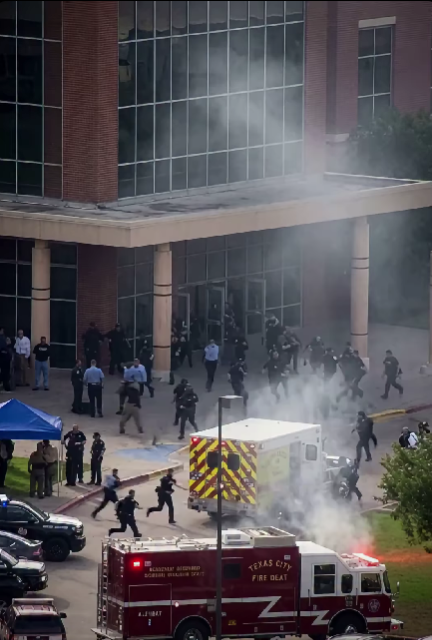
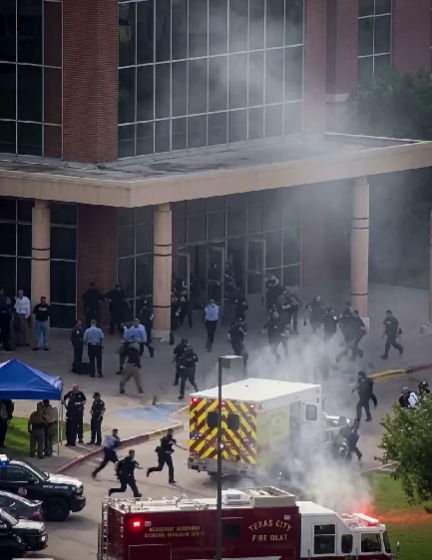
The effectiveness of emergency response depends not only on the school but also on coordination among police, fire departments, emergency medical services, hospitals, and local governments. Communication failures or uncertainty about responsibilities can complicate an emergency response. For this reason, many communities conduct joint exercises designed to test coordination between agencies.
Law Enforcement Response
Law enforcement agencies have developed specialized approaches for responding to active threats in schools. Modern active-shooter response doctrine generally emphasizes rapidly addressing an ongoing threat rather than waiting for specialized units to arrive before entering a dangerous area.
At the same time, response procedures have changed as agencies have learned from previous incidents. Investigations frequently examine how dispatchers, officers, school personnel, emergency medical providers, and other agencies communicated and acted during an incident.
After a shooting, law enforcement also has responsibilities beyond stopping the immediate threat. Investigators must preserve evidence, identify victims, establish timelines, interview witnesses, and determine how the perpetrator obtained access to weapons or entered the school. These investigations can continue for months or longer.
Community and Psychological Impact
The consequences of a school shooting extend far beyond the immediate victims. Students, teachers, families, first responders, and community members may experience grief, fear, anxiety, disruption to education, and difficulties returning to normal routines.
Students who survive an attack may experience different responses depending on their individual circumstances. Some may develop symptoms associated with trauma, while others may experience temporary distress and gradually recover. Teachers and school employees can also experience significant psychological effects, particularly if they witnessed the event or were directly involved in responding.
Families of victims face permanent losses, while the broader community may experience prolonged mourning. Memorials, public ceremonies, counseling programs, and community gatherings can become important parts of the recovery process. Schools may also face difficult decisions about reopening, modifying routines, communicating with families, and supporting students who do not feel safe returning.
The economic consequences can also be substantial. Communities may face costs associated with emergency services, investigations, medical treatment, counseling, school repairs, legal proceedings, and long-term support programs. These effects can continue long after media attention has declined.
Policy Debates and Areas of Disagreement
School shootings have generated significant disagreement over the most appropriate prevention and response policies. Different groups place different emphasis on firearm regulation, school security, mental-health services, threat assessment, family involvement, community intervention, law enforcement, or broader social conditions.
Some policy proposals focus on reducing access to firearms by individuals considered to pose a significant risk. Other proposals emphasize improving school security and emergency response. Still others focus on mental-health services, violence-prevention programs, or improving communication between schools, families, and public agencies.
Evidence regarding individual interventions varies. Some strategies have stronger empirical support for particular outcomes than others, while certain measures remain controversial or difficult to evaluate because school shootings are relatively rare events. A policy can also produce benefits in one area while creating costs or unintended consequences in another. For example, increased security may improve access control while also changing how students experience their school environment.
Conclusion
School shootings in the United States cannot be adequately explained by a single factor or solved through one intervention. They involve interactions between individual behavior, firearm access, social circumstances, school environments, warning-sign identification, emergency preparedness, and community response. Because incidents differ substantially, prevention efforts generally require multiple layers rather than reliance on one strategy.
A comprehensive approach can include responsible firearm-storage practices, effective threat-assessment systems, accessible mental-health and counseling services, supportive school environments, appropriate security measures, clear emergency procedures, and coordination among schools and public-safety agencies. At the same time, policies should be evaluated using evidence rather than assumptions about the causes of violence.
Ultimately, the goal of school-safety policy is not simply to respond effectively after an attack has occurred, but to reduce risks beforehand while preserving schools as places where students can learn and participate in normal educational and social activities. Continued research, careful evaluation of prevention programs, and cooperation among educators, families, researchers, policymakers, law enforcement, and communities remain important components of addressing this complex public-safety issue.