
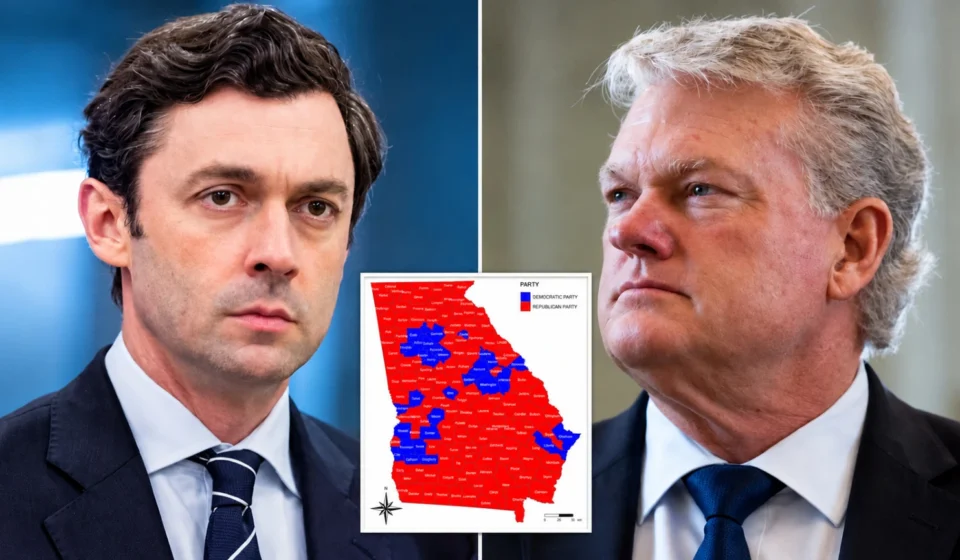

Georgia voters cast 188,667 in-person ballots on the opening day of early voting Tuesday, shattering the state’s previous midterm record and reflecting extraordinary turnout surge in one of the nation’s most competitive electoral battlegrounds.
The figure represents a 40 percent increase over the 134,962 opening-day votes recorded in 2022 and dwarfs the 70,849 votes cast on the first day of early voting in 2018. The rush to vote reflects the intensity of Georgia’s 2026 contests, which include closely watched races for U.S. Senate, governor, and other statewide offices.
Secretary of State Brad Raffensperger announced the numbers and attributed the turnout surge to voter confidence in Georgia’s election administration. “This record-breaking turnout proves that voters have confidence in the integrity of our elections,” Raffensperger said. “It’s a testament to our strong election system overseen by 159 of the best county election officials in the country.”
What Happened
Election officials reported 10,267 accepted absentee ballots alongside the in-person votes, underscoring participation extending across multiple voting channels. By October 15, statewide totals had climbed to approximately 365,000 in-person votes and more than 16,000 accepted absentee ballots, indicating the initial surge continued beyond opening day.
County-level data showed the momentum spreading across metropolitan areas. Cobb County, a bellwether suburban region, reported 16,392 voters across 13 early voting locations on opening day. Election workers reported processing times averaging approximately one minute and 16 seconds, with the busiest location—First Baptist Church of Smyrna—handling 808 voters during the opening day.
Local officials described orderly operations despite heavy demand, offering early evidence that the state’s election infrastructure managed the initial rush without significant disruption. Georgia’s early voting period continues through October 30, with Saturday voting scheduled for October 17 and October 24, and some counties offering optional Sunday voting.

The Reaction
The surge offers Georgia Republicans a visible demonstration of voter engagement heading into consequential contests. The Senate race between Republican Congressman Mike Collins and Democratic Senator Jon Ossoff has drawn substantial national attention and investment from both parties. A Republican victory would represent a significant pickup opportunity for the party, though recent polling has shown Ossoff leading in some surveys, suggesting the race remains genuinely competitive.
The gubernatorial contest between Republican businessman Rick Jackson and former Democratic Atlanta Mayor Keisha Lance Bottoms also commands considerable statewide resources. Republican Governor Brian Kemp is term-limited, creating an open-seat race with significant implications for Georgia’s policy direction on taxation, public safety, education, and election administration.
The record-breaking turnout alone cannot indicate which party will benefit, as ballots remain secret until tabulation and well-funded Democratic and Republican campaigns are competing intensely for voters. President Donald Trump carried Georgia in 2024 by approximately two percentage points, establishing a competitive baseline in a state where suburban counties often determine statewide outcomes.
What This Means
Georgia’s 7.5 million active voters leave considerable room for additional participation before Election Day on November 3. Raffensperger said he expects overall turnout to challenge the previous midterm benchmark, when nearly four million Georgians voted across the entire election cycle.
High turnout in battleground states typically signals voter motivation, though historical data shows participation surges do not automatically favor one party over another. Both campaigns have invested heavily in voter mobilization, field operations, and advertising, making the composition of the electorate—not merely its size—the decisive factor in close contests.
The deadline to request an absentee ballot is October 23, and Election Day voting occurs November 3. The state has also implemented a new check-in requirement directing poll workers to record voter names manually after completing electronic verification, adding an additional step to the voting process that election officials say will enhance security and transparency.