
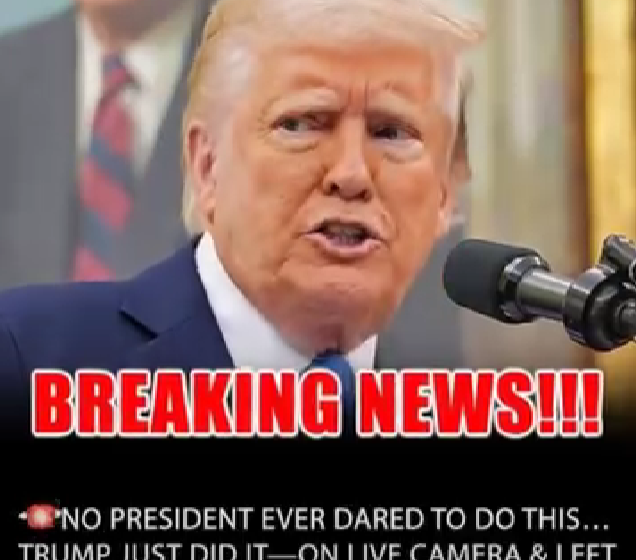

The atmosphere in the briefing room was thick with anticipation as the cameras began to roll, but nobody could have predicted the unprecedented spectacle that was about to unfold before the eyes of the nation. For months, political analysts and commentators had speculated about the direction of the current administration, yet the moment Donald Trump stepped up to the podium, he entirely bypassed the usual political theater.
There was no mention of the economy, no detailed breakdown of complex foreign policy decisions, and no traditional opening statement about the state of the union. Instead, the focus shifted sharply, locking onto a target that has been at the center of the political storm for years.
As reporters adjusted their microphones and leaned forward in their seats, the room fell into an uneasy silence. Trump paused briefly, scanning the audience with an expression that revealed little about what was coming next. His opening remarks were direct, and the tone was unmistakably confrontational. Rather than following the carefully structured format typically associated with official briefings, he appeared determined to steer the conversation toward a subject that has repeatedly divided public opinion and dominated headlines.
The reaction was immediate. Some journalists exchanged surprised glances, while others began typing furiously, recognizing that the president’s words could quickly become the leading story across the country. Within minutes, clips from the briefing began circulating online, prompting intense discussion among political commentators, supporters, critics, and ordinary citizens. Everyone seemed eager to understand the significance of the moment and what it might mean for the administration’s next moves.
Yet the most striking aspect of the briefing was not simply the subject Trump chose to address. It was the manner in which he approached it. His remarks challenged familiar expectations about presidential communication, raising questions about the relationship between political leadership, media coverage, and public accountability. In an environment where every statement can be dissected, quoted, and shared across multiple platforms within seconds, even a brief exchange can take on a significance far beyond the room in which it occurs.
For his supporters, the approach could be interpreted as a demonstration of directness and a willingness to confront issues they believe have been overlooked or inadequately addressed by traditional political institutions. They might view his refusal to follow a conventional script as evidence that he intends to communicate on his own terms rather than allow established expectations to dictate the conversation. To them, the moment could represent a continuation of the communication style that has defined much of his political career.
Critics, however, might interpret the same event differently. They could question whether the confrontational tone contributed to meaningful public discussion or instead diverted attention from other pressing matters. For these observers, the central issue would not be whether the remarks generated headlines, but whether they provided verifiable information, clarified government policy, or offered concrete answers to the questions facing the public.
This divide illustrates a broader challenge in modern political communication. Public figures increasingly operate in an environment where attention is a valuable commodity, and dramatic statements can travel farther and faster than detailed explanations. A single provocative remark may generate millions of views, but widespread attention does not automatically translate into greater public understanding. Distinguishing between rhetoric and substantive policy therefore remains essential for journalists and audiences alike.
The briefing also highlighted the important role played by the press. Reporters attending such events are expected to examine official statements, challenge unsupported assertions, and seek clarification when important details remain unclear. Their responsibility extends beyond recording what a political leader says. They must also consider the evidence behind the claims, the context in which they are made, and the practical consequences of any proposed actions.
For the public, the challenge is equally significant. In an era of rapid information sharing, excerpts from speeches and briefings are often presented without the surrounding context. A short video clip can create a powerful impression while leaving out qualifications, earlier statements, or subsequent explanations. Examining complete recordings, consulting multiple credible news sources, and separating confirmed facts from speculation can help audiences develop a more balanced understanding of controversial events.
Ultimately, the significance of the briefing would depend on more than the immediate reaction it generated. The important questions would concern what was actually said, whether the statements were supported by evidence, and whether they were followed by specific decisions or measurable changes in government policy. Political moments can capture national attention almost instantly, but their lasting importance is usually determined by what happens afterward.
As the cameras continued recording and the questions mounted, one reality became increasingly clear: political communication is no longer confined to the walls of a briefing room. Every statement enters a much larger public conversation, where interpretations compete, claims are scrutinized, and reactions can shape the broader political narrative. Whether the episode ultimately represented a substantive policy moment or another highly publicized exchange, its wider significance would need to be assessed through evidence rather than spectacle alone.
In the end, the most important lesson was not simply that an unexpected statement could command the nation’s attention. It was that public attention must be followed by careful examination. The words spoken at a podium may begin a national debate, but facts, context, accountability, and the consequences of subsequent decisions are what allow the public to understand what the moment truly means.