BUCKLE UP: Breaking Update After Florida Governor Race Called – The One Thing No One Expected Just Happened

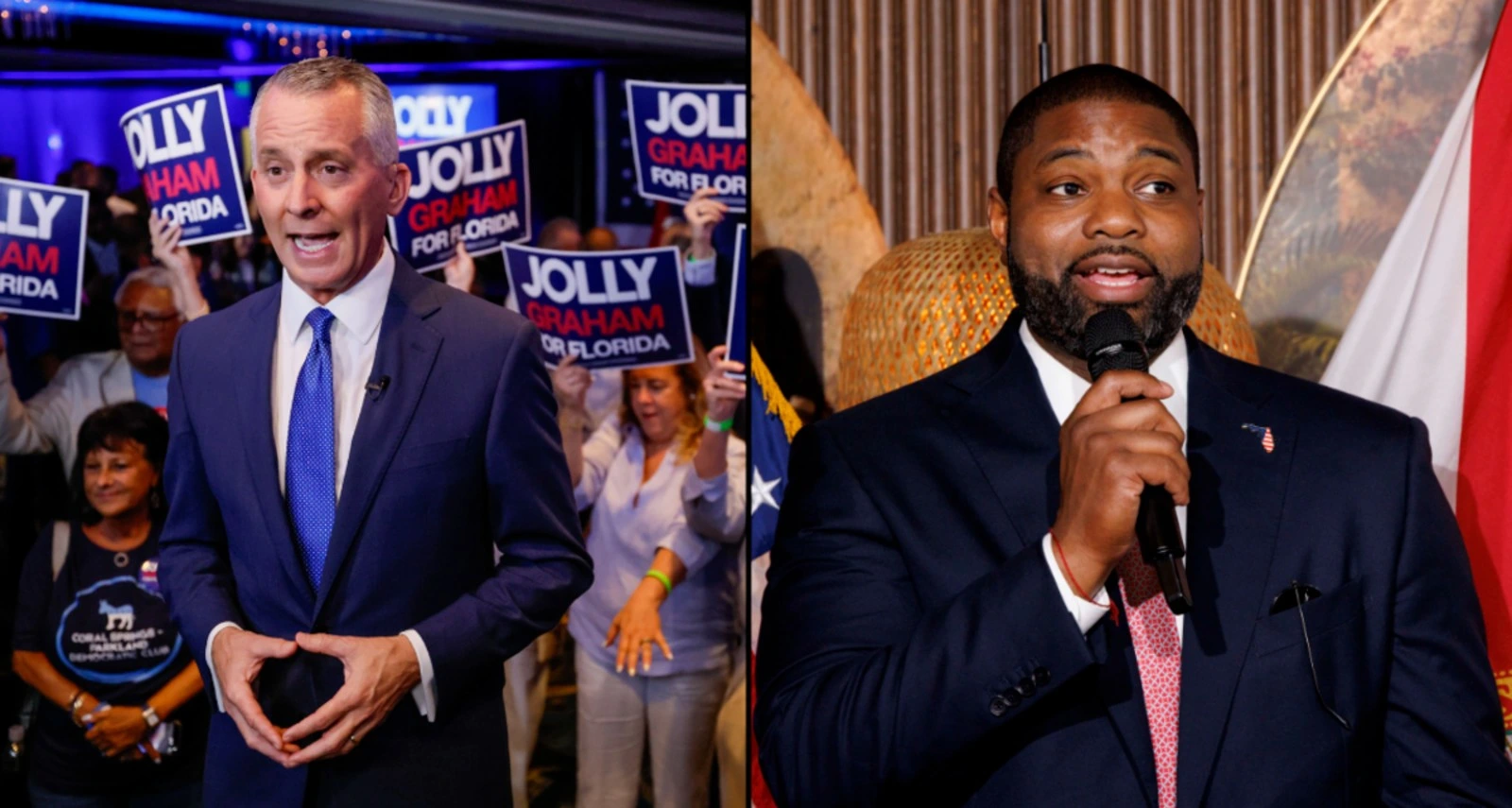
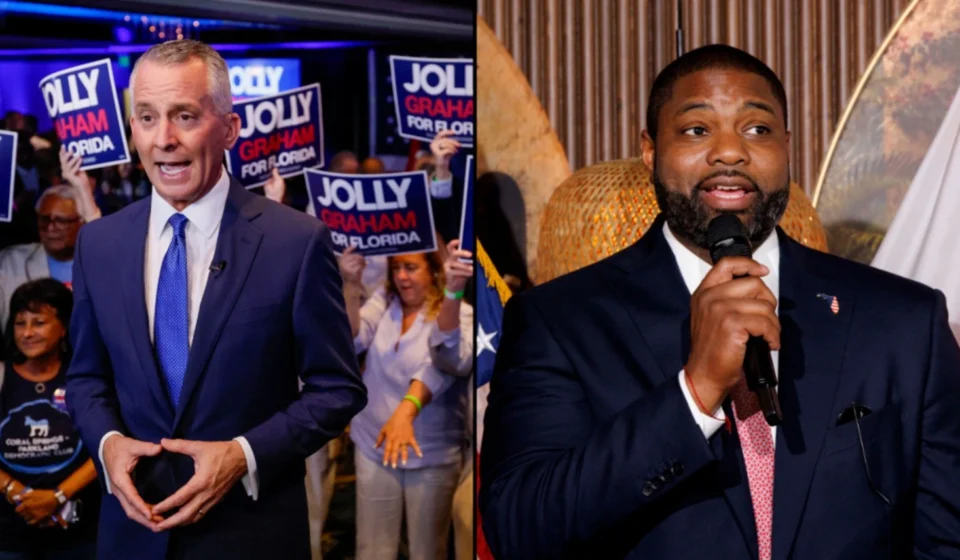
A University of North Florida poll released this week shows Republican Byron Donalds leading Democrat David Jolly 46% to 41% among likely Florida voters in the state’s closely watched 2026 gubernatorial race, with Donalds capitalizing on endorsements from both President Trump and Governor Ron DeSantis.
The survey captures a critical moment in Florida politics as the race enters its final phase, with Donalds running on an agenda centered on tax cuts and government efficiency, while Jolly positions himself as a moderate focused on affordability and education. The five-point lead reflects Donalds’ momentum following his primary victory in a crowded field of 11 Republican candidates.
What Happened
The UNF poll found Donalds commanding support among likely midterm voters, while an additional 5% backed alternative candidates, 2% said they would not vote, and 6% remained undecided. The results underscore the Republican’s consolidation of the party base following his primary win, which occurred despite competition from well-funded opponents across the ideological spectrum.
Donalds’ campaign has invested heavily in voter contact, reporting that volunteers knocked on more than 300,000 doors as of the poll release. The campaign also announced it had raised over $100 million for statewide operations, signaling substantial resources devoted to both messaging and ground organization heading into the final election period.
Ashley Moody, who holds the attorney general position after Marco Rubio’s January 2025 resignation to become Secretary of State, appears in her own competitive races. Moody’s path to office illustrates the dynamics of Florida’s executive ladder, where departures at higher levels create opportunities for advancement among sitting officeholders.
The Reaction
Ryan Smith, Donalds’ strategist, characterized the race as a choice between competing visions for the state’s future. Smith highlighted Donalds’ focus on affordability, public safety, and what the campaign describes as accountability measures, positioning these themes as central to voter concerns heading into 2026.
Jolly, a former Republican congressman who switched parties and now campaigns as a Democrat, has emphasized housing affordability, education funding, and insurance reform. His campaign argues that his centrist background and legislative experience qualify him to govern a state where independent voters have grown as a political force in recent years.

Recent national media coverage drew attention to the race when Donalds appeared on HBO’s “Real Time” with Bill Maher. During that segment, Maher suggested that Donalds’ performance in Florida’s Panhandle counties during the Republican primary reflected underlying racial dynamics, noting that Donalds finished behind other candidates in rural areas where the Republican electorate is predominantly White.
Donalds pushed back on that framing. “There are counties we did incredibly well in that we won. There were some counties that we fell a little short in, that’s OK,” Donalds said on the program. He noted his competitive position in a field of 11 candidates and argued that merit, not demographic factors, determines political success in Florida.
“Florida really has become the microcosm of what we all want,” Donalds said. “It’s a meritocracy. And it’s about the best person with the best views, the best skills, the best talent moving forward to represent your state.”
What This Means
The poll snapshot provides a baseline measure in a race that will test whether Republican organizational strength and dual endorsements from Trump and DeSantis outweigh Democratic efforts to expand the party’s appeal in Florida. The state’s electoral history shows that Republican margins have expanded in recent cycles, though Democrats continue to compete aggressively in key demographic and geographic segments.
The race also reflects broader questions about how candidates address questions of identity and representation in contemporary politics. Donalds’ emphasis on merit-based governance and opposition to what he characterizes as identity-focused framing may resonate with some voters while potentially alienating others who view such arguments as dismissive of historical and continuing inequities.
As the 2026 race progresses, both campaigns will refine their messaging in response to evolving political conditions, new polling data, and national events that may shape voter sentiment. The outcome could influence the shape of Florida Republican politics beyond Donalds’ gubernatorial ambitions and set precedent for how candidates of color navigate questions of identity within conservative political spaces.